|
|||
| MACAO | <Search <Archives <eBulletin | ||

December 17, 2025 Macao Announces Its First Technology R&D Industrial Park Macao authorities have unveiled a landmark initiative that signals a decisive shift in the city’s economic diversification strategy: the establishment of its first industrial park dedicated to scientific and technological research and development. With an initial investment exceeding MOP18 billion (US$2.24 billion), the project represents one of the most ambitious undertakings in Macau’s modern development agenda, positioning the city as a regional hub for innovation and cross-border collaboration.
Budget and Phasing
The financial commitment was disclosed by legislator Ip Sio Kai following a closed-door briefing with government representatives. The investment will be staged between 2026 and 2029, with MOP300 million earmarked for preparatory works in 2026. This phased approach reflects both the scale of the undertaking and the government’s intent to align capital deployment with design, construction, and operational milestones.
Two sites have been designated:
1. Taipa (opposite the airport)
Valued at MOP13.66 billion, this location offers strategic connectivity for international collaboration and logistics.
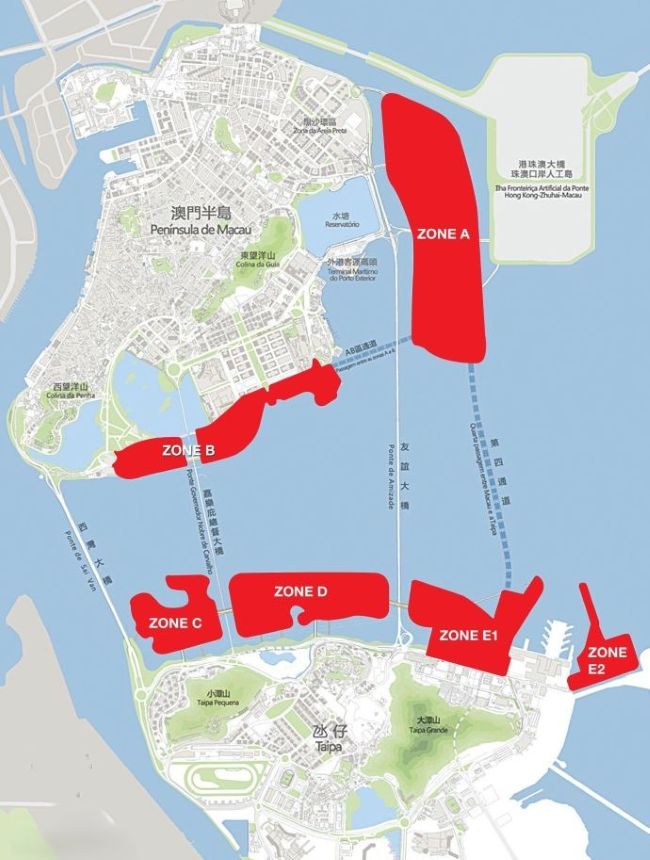
2. Western Zone E
Valued at MOP4.44 billion, this site provides expansion capacity and integration with Macao’s broader urban redevelopment framework.
Surveying and design work are scheduled to commence next year, laying the groundwork for construction and subsequent industry-academic partnerships.
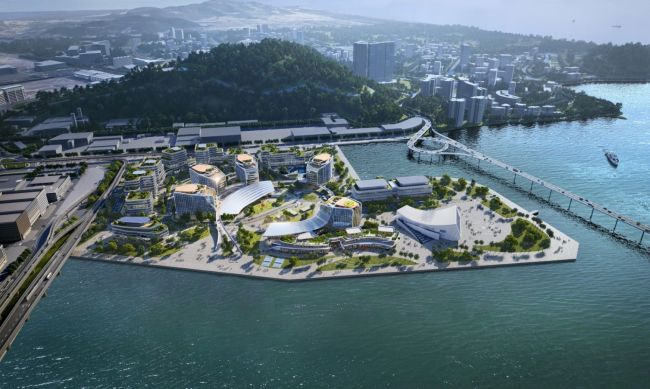 Western Zone E
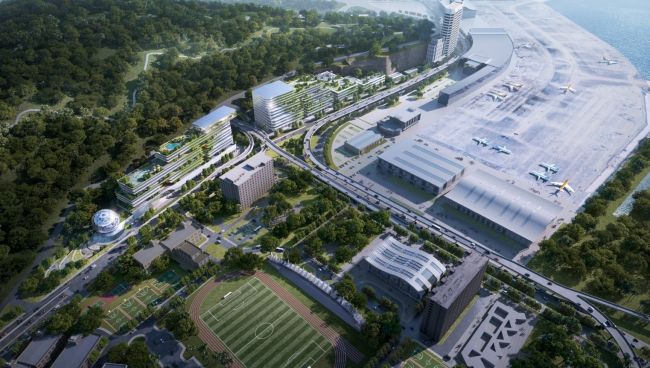 Taipa (opposite the airport)
Sectoral Focus
The industrial park will initially concentrate on four priority sectors:
Biomedicine
Leveraging regional expertise and responding to global demand for pharmaceutical innovation.
Integrated Circuits
Supporting China’s drive for semiconductor independence and technological sovereignty.
Digital Technology
Fostering applications in AI, big data, and smart city solutions.
Aerospace
Aligning with national strategies to expand China’s footprint in space exploration and satellite technology.
This sectoral focus underscores Macao’s ambition to move beyond its traditional reliance on gaming and tourism, embedding itself within the Greater Bay Area’s innovation ecosystem.
Strategic Positioning
The park is envisioned as a launchpad for Chinese technology firms seeking international exposure, particularly in Portuguese-speaking markets where Macao’s linguistic and cultural ties offer a unique advantage. Simultaneously, it will serve as a landing base for international projects, enabling joint ventures and collaborative research between global institutions and local academia.
For building professionals, this translates into demand for specialized facilities:
- High-spec laboratories and cleanrooms.
- Flexible office and co-working spaces for startups.
- Logistics and warehousing infrastructure tailored to R&D supply chains.
- Integrated residential and cultural amenities to attract global talent.
Policy and Urban Development Implications
The industrial park complements Macao’s broader diversification agenda. Authorities recently announced a separate flagship project aimed at boosting tourism and cultural offerings, though this initiative remains at the tendering stage with no budget disclosed. Together, these projects reflect a dual-track strategy: strengthening Macao’s knowledge economy while reinforcing its cultural and tourism appeal.
From a land-use and redevelopment perspective, the industrial park represents:
- A catalyst for Taipa’s transformation into a mixed-use innovation district.
- An anchor project for Zone E, stimulating adjacent infrastructure and real estate development.
- A precedent for integrating industry-academia-research collaborations into Macao’s urban fabric, requiring careful coordination of zoning, utilities, and transport networks.
Ultimately, the industrial park is more than a construction project—it is a strategic platform for Macao’s economic transformation, requiring building professionals to engage not only as contractors but as partners in shaping the city’s innovation-driven future. (Reported by Building.hk)
 |
|



|