|
|||
| HONG KONG | <Search <Archives <eBulletin Next> | ||

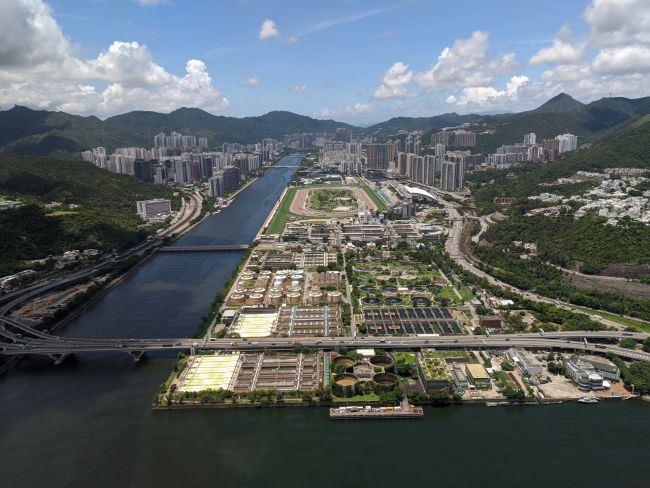
July 17, 2026 Technology and Ecology Combined: Remaining Works Kick Off for Hong Kong's Largest Cavern Sewage Treatment Plant Hong Kong's environmental infrastructure has reached a new milestone. The Drainage Services Department’s flagship project, "Relocation of Sha Tin Sewage Treatment Plant to Caverns," has fully entered its critical "Remaining Works" phase. As the largest relocation scheme of its kind in Hong Kong, this project will free up valuable land resources and set a new standard for sustainable urban development.
Dual-Purpose Planning: Freeing Up Premium Land and Enhancing Community Environments
The core planning of this project lies in a win-win spatial reorganization. By relocating Hong Kong's largest secondary sewage treatment plant into the rocky terrain of Mt. Nui Po, the project is expected to free up to 28 hectares of land at the existing site. This releases crucial space for housing and community development in the Sha Tin and Ma On Shan areas. The new cavern facility will occupy only 14 hectares—half the size of the original plant. By utilizing the caverns as natural barriers, combined with a fully enclosed design and negative pressure ventilation systems, the project will eradicate odor issues and drastically improve the surrounding living environment.
Stringent Requirements: High-Capacity Treatment and Comprehensive Project Delivery
Regarding project requirements, the new cavern sewage treatment plant must sustain a daily sewage treatment capacity of 340,000 cubic meters, serving over 63,000 local residents with stable secondary treatment. Furthermore, because the remaining works cover highly complex scopes—including civil construction, E&M installations, fire services, procurement of multiple wastewater treatment systems, and land decontamination of the old site—the government has mandated strict Integrated Project Delivery Partner (IDP) service requirements to ensure seamless collaboration across overlapping schedules.
Construction Schedule: Multi-Phase Progression and Seamless Transition
The entire relocation plan is being implemented sequentially across distinct phases:
Engineering Solutions: Advanced Technologies Overcoming Underground Construction Challenges
Facing narrow underground spaces, limited ventilation, and the technical complexity of managing multiple concurrent contracts, the project has introduced innovative engineering solutions:
The "Design and Build" Integrated Project Delivery Partner (IDP) services for the remaining works of this project have been officially awarded to the Egis-SMEDI Joint Venture (ESJV), led by Egis in partnership with the Shanghai Municipal Engineering Design Institute (Group) Co., Ltd. (SMEDI), safeguarding the execution of this world-class underground infrastructure. The total estimated project cost for the entire relocation of the Sha Tin Sewage Treatment Works to caverns is HK$32.8 billion. Cost Breakdown by Major Phases
According to the Legislative Council and Drainage Services Department (DSD) documentation, the budget is split across several key developmental stages:
Stage 1: Site Formation and Access Tunnels (Completed): Budgeted at approximately HK$2.07 billion, which kicked off the initial cavern preparation and preliminary infrastructure.
Stage 2: Main Caverns Construction and Upstream Sewerage (In Progress): Approved at an estimated cost of HK$14.08 billion, covering the extensive structural cavern excavation and deep mountain tunneling.
Remaining Works (Latest Phase): The final phase was approved by the Finance Committee for HK$12.93 billion. This chunk funds the internal equipment installation, E&M utilities, testing/commissioning, and the ultimate decommissioning and decontamination of the old site.
(Reported by Building.hk)

|
|
 (HKSARG)


|