|
|||
| HONG KONG | <Search <Archives <eBulletin | ||

May 1, 2026 Hotel-to-PBSA Conversions in Hong Kong: Policy-Driven Asset Repositioning and Investment Dynamics In recent years, Hong Kong has witnessed the early-stage emergence of Purpose-Built Student Accommodation (PBSA) as a distinct real estate asset class, driven primarily by policy facilitation and structural demand imbalances. PBSA refers to student housing that is specifically designed, built, and professionally operated for student tenants, combining elements of residential, hospitality, and co-living formats. Unlike traditional university dormitories or ad hoc residential rentals, PBSA is increasingly viewed as an institutional-grade, income-generating asset. From a supply perspective, the market is still in its infancy. Only a limited number of projects have been completed or formally announced, but they provide important benchmarks. Notable examples include the Y83 project in Hung Hom (converted from a hotel and backed by institutional capital), MU88 operated by a local university, and smaller-scale private sector developments such as CampusOne-branded properties. Larger pipeline projects—such as the planned conversion of a major Kowloon City hotel into approximately 1,500 student beds—signal a move toward scale and portfolio-based investment strategies.
Geographically, most projects are concentrated in Kowloon districts such as Hung Hom, Tsim Sha Tsui, and To Kwa Wan. These areas benefit from proximity to major universities and a high concentration of existing hotel stock, making them ideal candidates for adaptive reuse. This clustering reflects a pragmatic alignment between demand drivers (student populations) and supply-side opportunities (distressed or underutilized hospitality assets).
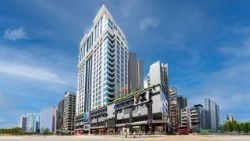
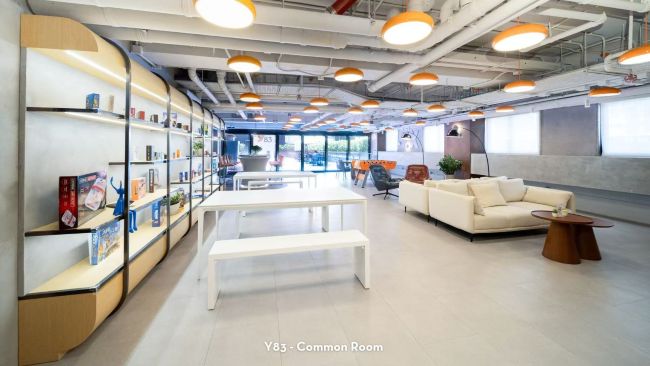 (Photos: Y83)
From a technical and cost standpoint, hotel conversions are significantly more efficient than office conversions. Typical capital expenditure for hotel-to-PBSA conversion ranges from approximately HK$300 to HK$500 per square foot, as existing room layouts and en-suite bathrooms can largely be retained. In contrast, office-to-PBSA conversions may cost HK$1,500 to HK$2,000 per square foot due to the need for extensive plumbing, fire safety upgrades, and spatial reconfiguration. Consequently, hotels represent the primary entry point for developers seeking faster turnaround and lower risk.
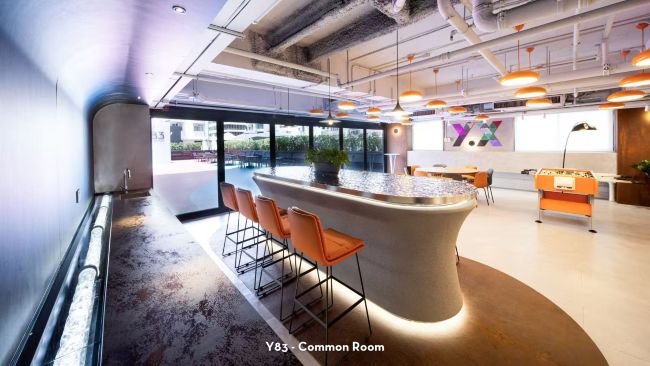
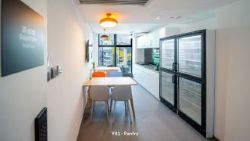
Design considerations also differ between asset types. Hotel conversions tend to focus on enhancing communal amenities—such as study areas, shared kitchens, and social spaces—while maintaining existing room configurations. Office conversions, however, require more fundamental redesign, including the introduction of vertical drainage systems, improved natural lighting, and compliance with residential fire safety standards. Modular construction techniques, such as prefabricated bathroom pods, are increasingly being explored to manage costs and construction timelines.
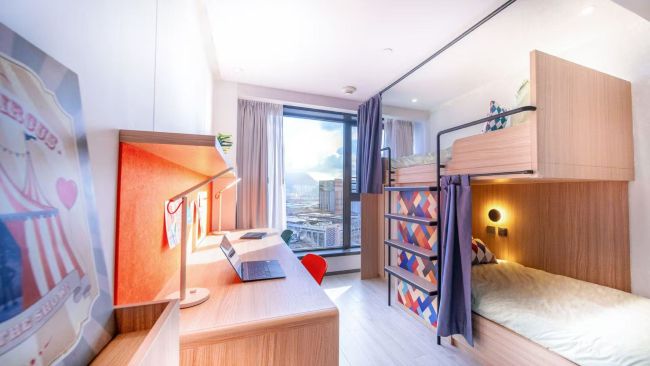 Demand fundamentals remain robust and structurally driven. Hong Kong has long faced a shortage of student accommodation, exacerbated by increasing numbers of non-local students and limited expansion capacity within university campuses. Market evidence suggests near-full occupancy rates in newly converted PBSA projects, reinforcing the resilience and predictability of this segment. Unlike traditional residential leasing, PBSA typically operates on a per-bed rental model, allowing for higher effective rents and more granular revenue optimization.
From an investment perspective, PBSA offers an attractive risk-return profile. Estimated yields in Hong Kong range from 4% to 7% or higher, outperforming traditional office assets, which have been under pressure due to rising vacancy rates and changing workplace dynamics. Moreover, PBSA benefits from relatively stable demand that is less sensitive to economic cycles, as education demand tends to persist even during downturns. The asset class also aligns with ESG considerations by addressing social infrastructure needs, which may enhance its appeal to institutional investors.
However, several risks and constraints should be noted. The market remains highly policy-dependent, and any changes in regulatory support could impact feasibility and returns. Operational complexity is another key factor, as PBSA requires active management, tenant engagement, and service provision—distinguishing it from passive rental investments. Additionally, not all buildings are suitable for conversion, particularly older office stock with structural or layout limitations.
 Looking ahead, the next one to two years are expected to see a rapid increase in applications and project commencements, primarily focused on hotel conversions. Over the medium term, office conversions may gain traction as technical solutions mature and market confidence grows. Ultimately, Hong Kong is likely to evolve toward a more institutionalized PBSA sector, potentially including portfolio aggregation and real estate investment trust (REIT) structures.
In conclusion, Hong Kong’s PBSA market represents a policy-enabled, demand-driven opportunity for asset repositioning. For developers and building professionals, the most viable near-term strategy lies in acquiring and converting hotel assets for long-term income generation. As the sector matures, operational expertise and scalable investment platforms will become critical differentiators in capturing value from this emerging asset class. (Reported by Building.hk)
 |
|



|