BUILDING.HK EXCLUSIVE SERIES | PART 1
Hong Kong's new policy ignites investor interest as purpose-built student accommodation emerges as a promising alternative asset class
Hong Kong's decision to facilitate the conversion of hotels into Purpose-Built Student Accommodation (PBSA) is beginning to reshape the city's alternative property market. Introduced as part of the Government's broader strategy to strengthen Hong Kong's position as an international education hub, the initiative has attracted growing attention from hotel owners, property investors and developers seeking new opportunities amid changing market dynamics.
While the policy is still in its early stages, market observers believe it could unlock a new investment sector capable of addressing Hong Kong's chronic shortage of student accommodation while breathing new life into underutilised hotel assets.
For many industry professionals, the question is no longer whether PBSA will become a significant asset class, but how quickly the sector can develop and how many suitable properties will enter the conversion pipeline over the next few years.
A Strategic Response to Growing Student Demand
The Government has made no secret of its ambition to transform Hong Kong into a leading international post-secondary education destination. Local universities continue to improve their global rankings, while institutions have stepped up recruitment of overseas and Mainland students. However, accommodation has become one of the most pressing constraints.
Most publicly funded universities can only provide hostel places for a portion of their students, forcing many local, Mainland and international students to compete in the private rental market. The shortage has become more acute as universities expand enrolment and the Government actively encourages the attraction of more non-local students.
Industry experts note that purpose-built student accommodation, already a mature asset class in cities such as London, Melbourne and Sydney, remains at a relatively early stage of development in Hong Kong. The new conversion policy is therefore viewed as an important step towards narrowing this supply gap.
Giving Hotels a New Lease of Life
The initiative also arrives at an opportune time for Hong Kong's hotel sector.
Although visitor arrivals have continued to recover following the reopening of international travel, the performance of individual hotels varies considerably depending on location, market positioning and customer mix. Older hotels, particularly those catering to budget and mid-market segments, have faced increasing pressure from rising operating costs, changing travel patterns and intensified competition.
For some owners, converting existing hotels into PBSA offers an opportunity to reposition ageing assets without undertaking complete redevelopment.
Compared with demolishing and rebuilding a property, adaptive reuse generally shortens project delivery time, reduces construction waste and aligns with broader environmental, social and governance (ESG) objectives. Existing room layouts, plumbing systems and communal facilities can often be adapted for student accommodation with relatively limited structural alterations, subject to regulatory approval. Industry practitioners say the policy provides owners with greater flexibility to evaluate the highest and best use of their assets based on market demand.
A New Investment Opportunity
Beyond solving a housing shortage, PBSA is attracting attention as an emerging investment product.
Unlike traditional hotels, which are highly sensitive to tourism cycles, student accommodation generally benefits from stable occupancy driven by the academic calendar. Leasing periods are longer, tenant turnover is more predictable and operational income is often less volatile.
Internationally, PBSA has become a recognised institutional asset class, attracting pension funds, insurance companies, real estate investment trusts (REITs) and specialist operators. In several mature markets, student housing portfolios have delivered resilient occupancy rates and competitive long-term returns.
Hong Kong's market remains relatively small, but property consultants believe growing student demand, limited land supply and government support could create favourable conditions for institutional investment over time.
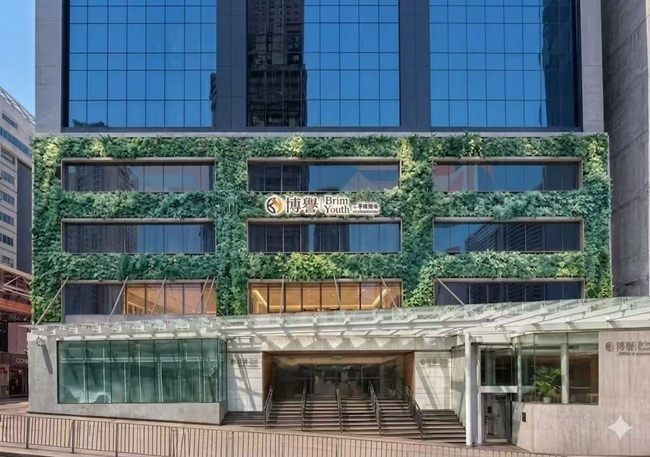
Brim Youth (Former Hotel COZi ∙ Oasis Conversion), 443 Castle Peak Road, Kwai Chung, Hong Kong
Positive Market Response
Since the Government announced measures to facilitate hotel-to-PBSA conversions, industry participants have reported increasing interest from property owners and investors exploring potential opportunities.
Although only a limited number of projects have been publicly identified so far, consultants indicate that feasibility studies are being undertaken for additional hotel assets in urban districts with strong transport connectivity and proximity to universities.
Locations such as Tsim Sha Tsui, Jordan, Hung Hom, North Point, Sai Ying Pun and Mong Kok are widely regarded as among the most suitable areas because of their established hotel stock and convenient access to major tertiary institutions.
Developers are also closely monitoring how planning procedures, lease conditions and building regulations will evolve as more projects proceed through the approval process.
Challenges Remain
Despite the positive sentiment, the sector still faces several challenges before large-scale development can take place. Not every hotel is suitable for conversion. Factors such as building age, floor plate configuration, fire safety requirements, common facilities, accessibility and compliance with current building regulations all influence project feasibility.
Financial considerations are equally important. Owners must assess conversion costs, expected rental income, financing arrangements and long-term operational requirements. Successful PBSA developments also require professional management capable of providing security, communal amenities, student services and an appropriate living environment.
Universities, private operators and investors will therefore need to work closely together to establish a sustainable operating model that meets both educational and commercial objectives.
Looking Ahead
Industry observers believe Hong Kong is only at the beginning of its PBSA journey.
As the Government continues promoting the city as an international education centre and universities recruit increasing numbers of overseas students, demand for quality student accommodation is expected to remain strong. At the same time, hotel owners are becoming more willing to consider adaptive reuse strategies that generate stable long-term income while extending the economic life of existing assets.
Whether PBSA ultimately develops into a major alternative property sector will depend on market acceptance, project execution and continued policy support. Nevertheless, one message is becoming increasingly clear: hotel-to-PBSA conversion has moved beyond being a niche concept and is emerging as a realistic development option for Hong Kong's property industry. (Reported by Building.hk)
Coming Next in Part 2
First Movers in Hong Kong's PBSA Market — An exclusive Building.hk survey of completed projects, hotel conversion schemes, planning applications and the emerging pipeline, including project locations, developers, student bed numbers, gross floor areas and key development facts.