|
|||
| Products & Services | <Search <Archives <eBulletin Next> | ||

March 3, 2026 Overall Building Materials Demand of the Philippines  < Main Page < Main PageThe Philippines building materials market was valued at about USD 27.99 billion in 2025. It is expected to grow to around USD 39.9 billion by 2034 — a CAGR ~4.0% from 2026 to 2034. This reflects broad demand tied to construction activity (residential, commercial, infrastructure). Hardware & Building Materials The hardware and building materials segment (which includes many products used in interior fixtures & fittings like boards, nails, trims, light interior walls, etc.) generated about US$ 15.29 billion in 2025. It’s forecast to grow at a ~2.8% annual rate through 2029 — relatively steady but slower than core construction materials. Prefabricated Construction & Components Prefabricated construction materials (which increasingly include interior wall and finish components) are in double-digit growth, reflecting broader construction modernization: Prefabricated construction total output was forecast to grow at about 9.5% CAGR from 2025–2029. Another analysis estimates the prefabricated buildings market could grow ~11.3% annually through 2035, reaching over USD 5.1 billion — driven by urban housing demand and infrastructure. Building System Components The building system components market (which includes structural and fit-out products such as interior steel systems, gypsum boards, MEP systems) is projected to grow about 6.6% CAGR from 2026–2031. Furniture & Interior Fittings While furniture and interior design products are part of broader interior demand, the market is expanding due to urbanization and lifestyle trends — especially in Metro Manila, Cebu, and Davao. Sustainable and eco-friendly materials are increasingly preferred, influenced by the Philippine Green Building Code, which also affects interior fixtures choices. Key Drivers of Demand Strong Construction Pipeline Large infrastructure programs (e.g., Build Better More and public works) are driving structural material demand. Residential permit growth (both multi-family and single-family) supports interior finishing demand over time. Urbanization & Population Growth Growing urban populations mean more housing, offices, mixed-use spaces — all require structural and interior materials. Prefabrication & Modern Techniques Prefab, modular and pre-engineered building methods are becoming more common, increasing demand for standardized material systems and interior finishes. Sustainability & Regulations Adoption of green building standards is pushing interest in eco-friendly interior materials (e.g., low-VOC finishes, recycled wood products). 5–10 Year Outlook (2026–2035) 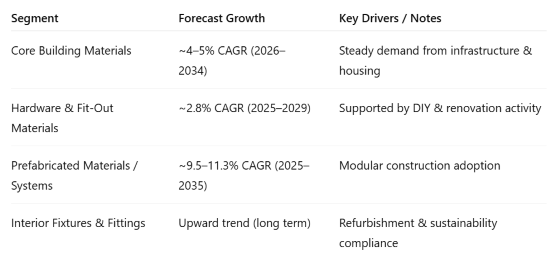 Interior Finishes & Fittings Demand for interior finishes (like gypsum wallboards, false ceilings, doors, trim, cabinetry) tends to follow construction growth plus renovation cycles. As more urban properties reach mid-life over the next decade, renovation & interior upgrades will add incremental demand beyond initial construction fit-outs. Summary: What to Expect Strong long-term growth in core building materials driven by infrastructure and urban housing. Interior fixtures & fittings will grow steadily, tied to both new construction and renovation demand. Prefabricated & systemized materials show the fastest growth — a key trend toward modernization. Sustainability and digital design tools (like BIM) are shaping material choices and workflows. (Reported by Building.hk) |
|

Copyright © Building.hk All rights reserved.
|