|
|||
| Industry News | <Search <Archives <eBulletin Next> | ||

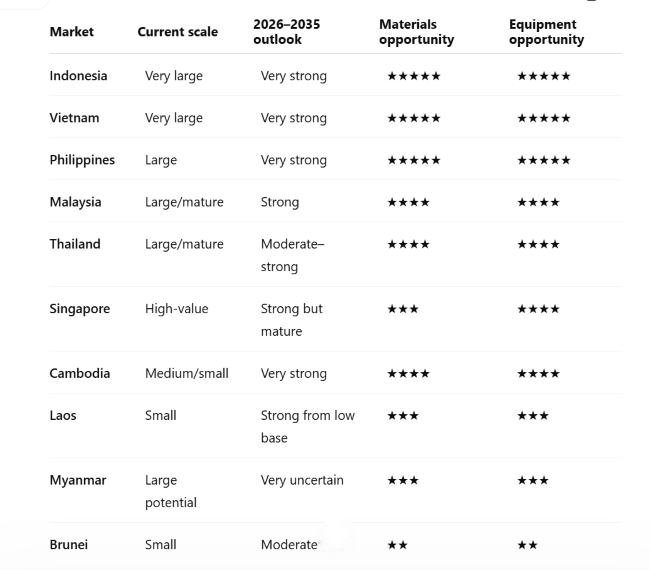
August 8, 2026 ASEAN Building Materials & Construction Equipment Market 2026 Market Position, 2030 Outlook and 2035 Opportunity Assessment Executive SummaryASEAN is entering a new decade of infrastructure, industrialisation and urban development. With 684 million people in 2024, ASEAN has become a US$3.8 trillion economic bloc and is projected by ASEAN itself to move towards being the world's fourth-largest economy by 2030. In 2024, ASEAN attracted approximately US$230 billion of FDI, demonstrating that the region is increasingly becoming a second manufacturing and investment base alongside China. For building-material and construction-equipment companies, the important point is that ASEAN is not one market. It consists of:
My assessment is that the combined annual addressable market for construction materials and equipment across ASEAN is already well above US$150 billion, when cement, concrete, aggregates, steel, glass, aluminium, architectural finishes, MEP products, building systems, machinery and related equipment are considered. There is no official ASEAN statistical series that measures this exact combined market. The US$150–180 billion range is therefore an analytical estimate, derived from national construction activity, major infrastructure pipelines and materials/equipment intensity. The machinery component is more measurable: the ASEAN construction-machinery market was estimated at US$8.11 billion in 2025, rising to US$8.51 billion in 2026 and projected to reach US$10.82 billion by 2031, equivalent to 4.92% CAGR. The long-term opportunity is substantially larger because ASEAN still has a major infrastructure deficit. ADB estimates ASEAN requires approximately US$184–210 billion of infrastructure investment annually to meet its 2030 infrastructure and climate objectives.
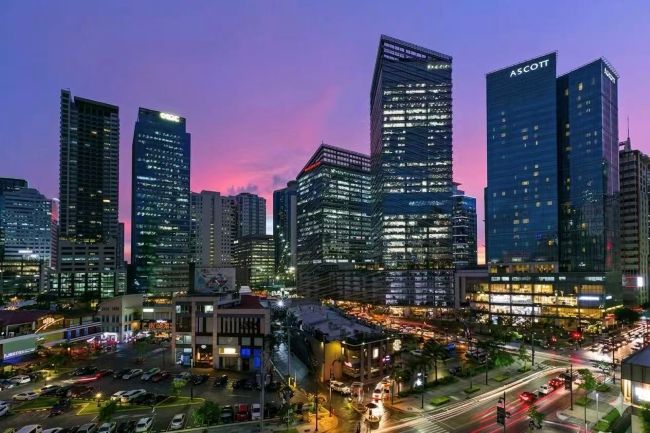
WHY ASEAN IS ENTERING A LONG BUILDING CYCLEThree structural forces will drive demand through 2035. 1. UrbanisationASEAN's population is already around 684 million and continues to urbanise. Across Asia-Pacific, around 1.2 billion additional people are expected to move into urban areas by 2050. This means continuing demand for housing, transport, water, sanitation, hospitals, schools, commercial buildings and urban utilities.
For ASEAN, this creates particularly strong demand for: Cement → steel → concrete → glass → aluminium → tiles → sanitaryware → electrical equipment → HVAC → elevators → prefabrication → construction machinery.
2. Infrastructure deficitASEAN's infrastructure requirement is considerably larger than its existing supply. ADB's long-running assessment estimated Southeast Asia's infrastructure requirement at around 5.7% of GDP annually, while more recent ADB analysis puts ASEAN's infrastructure and climate investment requirement at approximately US$184–210 billion per year. In May 2026, ADB announced that it intends to mobilise US$30 billion by 2030 for ASEAN, including substantial support for the ASEAN Power Grid, capital markets, AI readiness, blue economy and climate resilience.
|
|



Copyright © Building.hk All rights reserved.
|